7 Reasons Why Search Engine Optimization Is a Must for Every Successful Business Website
Search Engine Optimization: Why Your Business Website Needs It
The digital marketplace is becoming increasingly crowded, with millions of business websites competing to capture the attention of the same audience. Consumer behavior has fundamentally shifted toward researching and making purchase decisions online, making search engines the primary gateway between your business and your potential customers. The difference between having an effective digital presence and an ineffective one lies in your website’s ability to rank prominently in search results.
When you consider that more than 90% of online experiences begin with a search engine, the importance of search engine optimization becomes absolutely clear. Your competitors are already investing in Search Engine Optimization strategies, and without a comprehensive approach, your business is at serious risk of becoming invisible in the vast digital landscape.
Modern consumers expect to find what they need within the first set of search results. If your website does not appear on the first page of search results, you are essentially handing potential customers over to your competitors. This reality makes Search Engine Optimization not just an option, but a core requirement for business survival and growth in today’s digital economy.
What Is Search Engine Optimization and How Do Business Websites Benefit From It?
Search Engine Optimization, or SEO, is a complete set of strategies and techniques designed to improve your website’s visibility in organic search results. Unlike paid advertising, Search Engine Optimization focuses on earning traffic through high-quality, relevant content and technical improvements that search engines value.
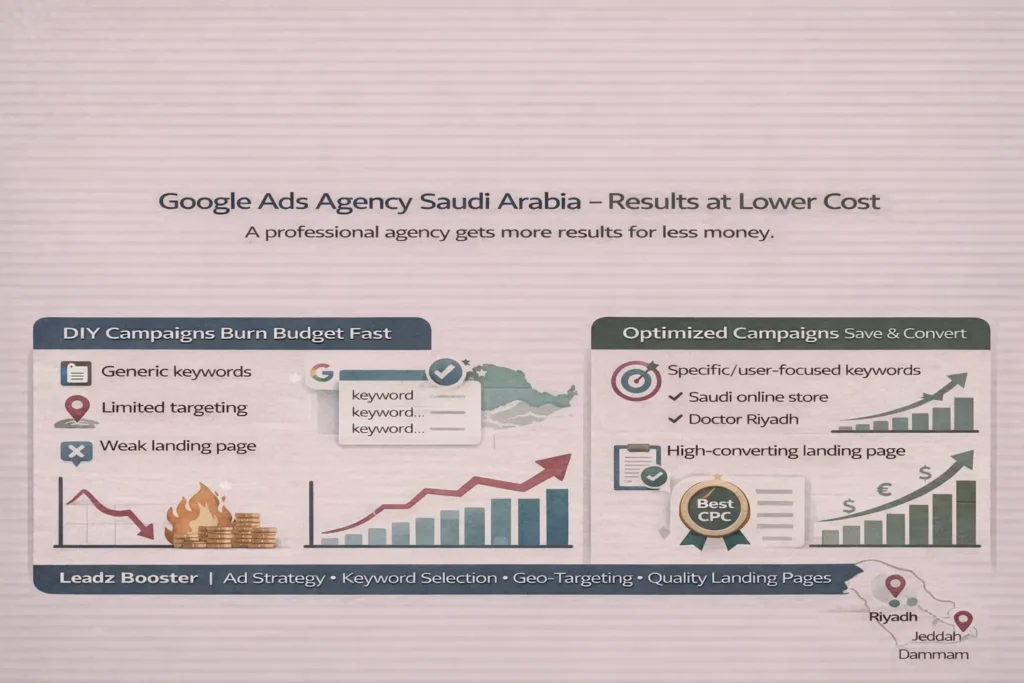
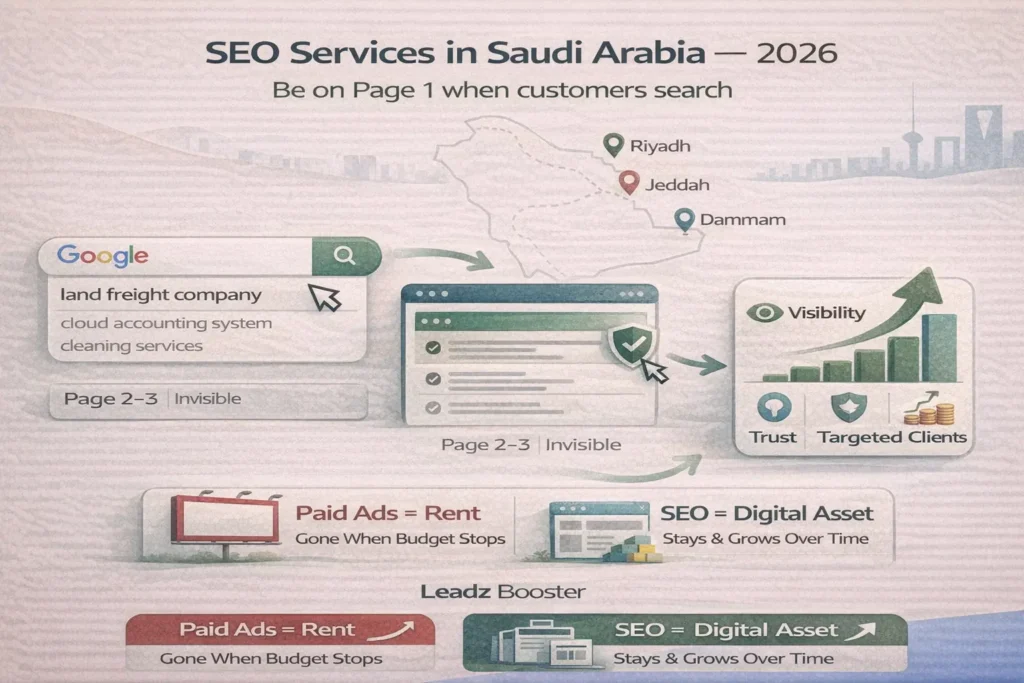
Understanding the difference between paid marketing and organic marketing is critical for business owners. While paid ads deliver instant visibility, they require ongoing budget and stop generating traffic the moment you stop paying. SEO, on the other hand, builds long-term value by establishing your website as an authority in your industry.
Search engines like Google use complex algorithms to evaluate and rank websites based on hundreds of factors. These algorithms assess your site’s relevance, authority, user experience, and technical performance to determine where your pages will appear in search results. Understanding these core factors allows you to strategically optimize your business website.
Key factors that influence your website’s ranking in search results include content quality, keyword relevance, page load speed, mobile responsiveness, user engagement metrics, and the authority of websites that link to you. Each of these elements contributes to your overall SEO performance and determines how easily customers can discover your business online.
Reason #1: Increasing Visibility and Reaching Potential Customers
Earning first-page rankings in search results significantly increases your visibility to potential customers who are actively searching for your products or services. Research consistently shows that the top five organic results receive the majority of clicks, with the first result alone capturing around 28% of all clicks.
When your website appears clearly for the right searches, you are putting your business in front of customers at the exact moment they are looking for the solutions you offer. This kind of targeted visibility is far more valuable than traditional advertising because it reaches people who have already shown interest in your field or in your specific offerings.
Local businesses benefit especially from SEO visibility, as search engines increasingly prioritize location-based results. When someone searches for services “near me” or in your city, strong SEO ensures that your website appears in local search results, driving more foot traffic and helping you win local customers.
The impact of improved visibility extends beyond immediate traffic gains. As more people discover and interact with your website, search engines interpret that engagement as proof of quality and relevance, which further improves your rankings and creates a positive feedback loop of growing visibility.
Reason #2: Building Trust and Credibility With Customers
High search rankings act as an implicit endorsement of your business’s credibility and trustworthiness. Consumers have been trained to associate top-ranking sites with industry leadership and reliability, making SEO a critical component of reputation management.
Strong content that answers customer questions and addresses their concerns highlights your expertise and builds confidence in your brand. When your site consistently delivers valuable information that helps users solve problems or make informed decisions, you position your business as a trusted authority in your space.
Customer reviews and ratings displayed in search results further strengthen your credibility. SEO strategies that encourage the visibility of positive reviews create a powerful display of social proof that influences buying decisions and builds trust with potential clients before they even land on your website.
Trust becomes even more important in highly competitive industries where customers have multiple options. When search engines repeatedly rank your website as high-quality, it signals to potential buyers that your business is established, reliable, and worthy of their attention and investment.
Reason #3: Achieving a High Return on Investment Compared to Other Marketing Methods
The cost-effectiveness of SEO compared to pay-per-click advertising makes it an attractive investment for businesses of all sizes. While paid ads require an ongoing budget, SEO delivers compounding benefits over time without additional cost per click.
Calculating ROI from organic traffic reveals the long-term value of SEO efforts. Once your website achieves strong rankings, it continues to generate qualified traffic and leads without the constant spend associated with paid advertising campaigns, creating a sustainable source of customer acquisition.
The lifetime value of customers acquired through organic search is often higher than those acquired through paid channels. Users who find your business through organic results typically show higher engagement levels and stronger conversion behavior because they discovered you through their own search process rather than through an interruptive ad.
Budget allocation becomes more efficient when businesses invest in SEO alongside other marketing channels. The sustainable traffic generated by SEO allows you to reduce dependency on paid media while maintaining — or even increasing — lead generation and customer acquisition overall.
Reason #4: Improving User Experience and Increasing Conversion Rates
The relationship between SEO and user experience creates a synergistic effect that benefits both search rankings and business performance. Best practices in SEO align closely with the elements that improve user satisfaction, including fast load times, mobile responsiveness, and intuitive navigation.
Improving site speed — a critical SEO factor — directly impacts conversion rates and customer satisfaction. Users expect pages to load within seconds, and any delay leads to higher bounce rates and missed sales opportunities. Search engines recognize this preference and reward fast websites with better rankings.
Mobile responsiveness is now mandatory, as mobile devices make up the vast majority of online traffic. Mobile-optimized websites not only improve search performance but also deliver better user experiences that drive higher engagement and stronger conversion rates.
High-quality content that meets user intent and provides comprehensive information helps visitors move through the customer journey more effectively. When your website content aligns with what users are searching for and delivers valuable insights, it naturally leads to longer session durations, lower bounce rates, and higher conversion rates.
Reason #5: Outperforming Competitors in the Digital Market
Competitive analysis and strategic SEO execution allow you to identify and exploit gaps in your competitors’ search strategies. Understanding which keywords your competitors rank for — and where they are weak — helps you build targeted strategies to capture market share.
Building sustainable competitive advantages through SEO requires ongoing effort and strategic thinking. While competitors may be able to copy individual tactics, comprehensive SEO strategies that include content marketing, technical optimization, and authority building are difficult to replicate quickly.
Tracking keyword competition helps you identify opportunities to rank for valuable terms that your competitors may be neglecting. By focusing on long-tail keywords and niche topics within your industry, you can establish strong positions before competitors even recognize the opportunity.
The cumulative effect of continuous SEO efforts creates barriers to entry that protect your market position. As your website builds authority and establishes strong rankings across relevant keywords. It becomes increasingly difficult for competitors to disrupt your visibility in search results.
Reason #6: Continuously Increasing Sales and Revenue
Organic traffic from search engines typically converts at higher rates than traffic from other sources because users are actively searching for solutions rather than being interrupted by ads. This intent-driven traffic creates opportunities for higher-quality leads and increased conversions.
Turning website visitors into customers requires strategic alignment between your SEO content and your sales process. When your content addresses customer pain points and guides users toward solutions. It naturally moves them through the buying decision process.
Content marketing that is fully integrated with SEO serves two purposes: it improves search rankings and drives sales. Educational content that demonstrates your expertise and highlights the benefits of your products or services builds trust and influences purchasing decisions throughout the customer journey.
Measuring the revenue impact of SEO efforts requires tracking the full customer journey from initial search to final purchase. Businesses that implement proper analytics and tracking often discover that SEO drives a significant portion of their total revenue. With effects that extend beyond immediate conversions to include brand awareness and customer lifetime value.
Reason #7: Building a Strong Foundation for Long-Term Growth
The sustainable nature of SEO results makes it an invaluable investment in your business’s future growth potential. Unlike ad campaigns that stop producing results when the funding ends. Well-executed SEO strategies continue delivering benefits for months or even years after implementation.
SEO supports future expansion plans by building domain authority and positioning your website as a comprehensive resource within your industry. This foundation allows you to rank more easily for new keywords and topics as your business grows and diversifies its offerings.
Developing a loyal customer base through valuable content creates repeat visitors who return to your site regularly and recommend your business to others. This kind of organic word-of-mouth marketing reinforces your SEO efforts and creates additional paths for customer acquisition.
Adapting to search engine algorithm updates and industry shifts becomes easier when your SEO strategy focuses on core best practices instead of manipulative tactics. Businesses that prioritize user value and technical excellence put themselves in a position to benefit from algorithm changes instead of being penalized by them.
Practical Steps to Start Optimizing Your Business Website for Search Engines
Analyzing your website’s current performance involves auditing technical factors, content quality, and competitiveness to identify the highest-impact improvement opportunities. This baseline assessment guides your Search Engine Optimization strategy and helps you prioritize enhancements based on potential return on investment.
Choosing the right keywords for your business requires understanding customer search behavior and the competitive landscape in your industry. Focus on terms that balance search volume with ranking difficulty, and prioritize long-tail keywords that indicate strong purchase intent.
On-page content and technical optimization work together to improve both search performance and user experience. Elements such as title tags, meta descriptions, and heading structures should include target keywords while staying natural and user-focused.
Building internal and external linking strategies helps establish your site’s content authority and improve the flow of ranking power across your pages. Internal linking guides users through your content and helps search engines understand your site’s structure. Earning external links from reputable sources signals the value and importance of your content.
Developing a content marketing plan aligned with SEO goals ensures a consistent flow of valuable content that attracts. Educates and engages your target audience. This content should answer customer questions, demonstrate expertise, and naturally incorporate relevant keywords while delivering real value.
Common Mistakes to Avoid When Optimizing Business Websites
Keyword stuffing is one of the most ineffective SEO mistakes, as search engines now prioritize natural content. User-focused content instead of raw keyword density. You should focus on creating comprehensive content that naturally includes relevant terms rather than forcing keywords into every paragraph.
Neglecting mobile optimization severely limits your website’s reach and search performance. Since mobile devices generate the majority of web traffic. Ensuring that your site delivers an excellent mobile experience is essential for both user satisfaction and search ranking.
Ignoring site speed has a major impact on both user experience and search ranking. Users quickly abandon pages that take too long to load. And search engines interpret these behavioral signals as indicators of poor quality. The result is lower rankings and reduced organic traffic.
Failing to consider local and cultural content relevance can also limit your effectiveness in specific markets. Understanding local search patterns and cultural preferences helps you build more relevant content that resonates with your target audience and performs better in local search results.
Relying on outdated or manipulative SEO tactics can lead to search engine penalties that cause serious damage to your site’s visibility. You should prioritize sustainable, ethical optimization strategies that put user value first and align with search engine guidelines.
How Do You Measure the Success of Your Website’s Search Engine Optimization Strategy?
Key performance indicators (KPIs) for SEO success go beyond simple rankings to include organic traffic growth. Conversion rates and revenue impact. Tracking these metrics gives you a complete view of how search optimization is contributing to your business goals.
Analytics tools and SEO measurement platforms provide detailed insights into your site’s search performance, user behavior, and competitive position. Google Analytics, Google Search Console. And specialized Search Engine Optimization platforms each offer different perspectives on how effective your SEO efforts are.
Interpreting data and turning insights into actionable business decisions requires understanding the relationships between different metrics and how they affect your bottom line. Regular analysis helps you identify trends, opportunities, and areas that need more focus or resources.
Creating a regular reporting schedule ensures continuous monitoring of SEO progress. And allows you to make timely adjustments to your strategy. Monthly or quarterly reviews of key metrics help maintain momentum and demonstrate the value of your SEO investment to stakeholders.
Keep reading and uncover secrets that can change the way you work. Digital Marketing Companies in Saudi Arabia: A Guide to Choosing the Best for Your Business
Investing in the Future: How Search Engine Optimization Ensures the Ongoing Success of Your Website
Long-term strategic thinking in SEO means building sustainable competitive advantages that continue generating value as your business evolves. This perspective requires patience and consistent effort, but ultimately delivers the highest return on investment from SEO.
Staying up to date with technological developments and search engine updates keeps your website competitive as the digital landscape changes. Remaining aware of industry shifts — and adjusting your strategy accordingly. Helps protect your visibility in search and maintain your competitive position.
Building a strong digital brand through SEO creates recognition. And trust that extends beyond search results and influences your entire online presence. This brand authority makes it easier to expand into new markets, products. Or services because you are entering with an existing foundation of credibility and visibility.
Preparing for a digital future and the evolution of e-commerce positions. Your business is to take advantage of emerging opportunities and changes in consumer behavior. Businesses with strong SEO foundations are better equipped to adapt to new technologies and market conditions while maintaining their competitive edge.
Search Engine Optimization is not just a marketing tactic — it is business infrastructure.
It is the framework that determines whether your brand is discovered, trusted, and chosen.
When done correctly, SEO fuels visibility, authority, lead generation, conversion rates, and long-term growth — all at once.
Keep reading and uncover secrets that can change the way you work. Grow Your Brand with Professional Digital Marketing in Saudi Arabia
Here is what that means for you in practice:
- Your website must be findable.
>If you are not visible in search, you are invisible to high-intent buyers who are actively looking for what you sell. - Your brand must be perceived as credible.
>High rankings, strong content, positive reviews, and professional user experience signal trust before the first conversation with a customer ever happens. - Your marketing must work efficiently.
Paid ads stop the moment you stop paying. Strong Search Engine Optimization becomes an always-on acquisition channel that lowers cost per lead over time. - Your website must convert.
Fast pages, mobile-friendly design, and content that aligns with buyer intent don’t just rank — they sell. - You must defend your position.
Your competitors are not standing still. Search Engine Optimization is how you claim market share. Protect it, and make it increasingly difficult for others to displace you. - You need to track what matters.
Rankings alone are not success. Revenue, lead quality, and customer lifetime value are the real indicators that SEO is working for your business. - You have to think long-term.
SEO is cumulative. When you invest in structure, authority, and relevance now. You are building an engine that supports every future product, offer, or market expansion.
Keep reading and uncover secrets that can change the way you work. Secrets Behind the Success of the Digital Marketing Strategies We Deliver to Our Clients in Riyadh and Jeddah
Where do you begin?
– Audit your current performance. Technical health, content quality, and competitive position.
– Define the right keywords: the ones your real buyers are actually searching for, not just broad vanity phrases.
– Align content with intent: answer the questions people ask before they buy.
– Build authority: get high-quality mentions, backlinks, and social proof.
– Keep improving: monitor, test, and adapt.
In today’s search-driven economy, SEO is not optional. It is a requirement for survival, scale, and serious growth.
Your competitors know that.
The only question left is: will you take that space, or will you let them have it?
Turn your goals into real achievements with our tailored services – request the service now.
Frequently Asked Questions
What is SEO, and how does it differ from paid ads?
SEO (Search Engine Optimization) improves your website’s visibility in organic results through high-quality content and technical enhancements. Paid ads buy immediate visibility but stop the moment you stop paying. SEO compounds over time, building authority and sustainable traffic.
Why is SEO essential for business growth today?
Most buyers start their journey on search engines, and the top results capture the majority of clicks (with the first result around 28%). Appearing on page one puts you in front of high-intent customers exactly when they’re looking, driving qualified traffic, leads, and long-term growth.
How does SEO improve user experience and conversions?
SEO best practices align with UX: fast load times, mobile responsiveness, clear structure, and intent-matched content. This reduces bounce rates, increases session duration, and guides visitors through the buying journey—leading to stronger conversion rates.
How do I measure the ROI of SEO?
Track KPIs beyond rankings: organic traffic, qualified leads, conversion rates, and revenue impact. Use Google Analytics and Search Console to follow the full journey from search to purchase; you’ll often find organic users show higher engagement and lifetime value than paid-only visitors.
What practical steps should a business take to start with SEO?
Begin with a technical/content/competitor audit, choose buyer-intent keywords (including long-tail), optimize titles/meta/headers, and build internal/external links. Publish a steady pipeline of helpful content, monitor results monthly or quarterly, and keep improving to defend and grow your position.