From SEO to Paid Ads: End-to-End Marketing for Your Online Store in Saudi Arabia — Your 2026 Guide
Marketing your online store in Saudi Arabia in 2026
In 2026, an online store for a Saudi business owner is no longer a luxury or side experiment; it’s a core sales channel and a primary touchpoint with customers. Demand for online purchasing in Saudi Arabia has surged with Vision 2030, the evolution of payment and shipping platforms, and along with it, competition has intensified between local stores and global brands entering the Saudi market day after day. In the middle of this crowd, having an e-commerce site without a clear plan to market your online store is like opening a shop on a main street with no sign and no lights; it exists, but no one notices it or understands its value.
Today’s Saudi visitor searches on Google before buying, compares prices, reads reviews, and follows Snapchat, Instagram, and TikTok ads before deciding where to order from. This is where the difference shows between a store that relies only on random campaigns or temporary discounts, and a store that has an integrated plan that starts with search engine optimization, extends to paid ads, content marketing, and customer relationship management. Marketing your online store in Saudi Arabia has become a long-term game that requires understanding the nature of the local market, how the Saudi customer thinks, and the channels they use daily—so the store transforms from a mere product display into a real sales machine that runs 24/7 and brings you new customers even while you sleep.
What does end-to-end marketing of your online store mean in the Saudi market?
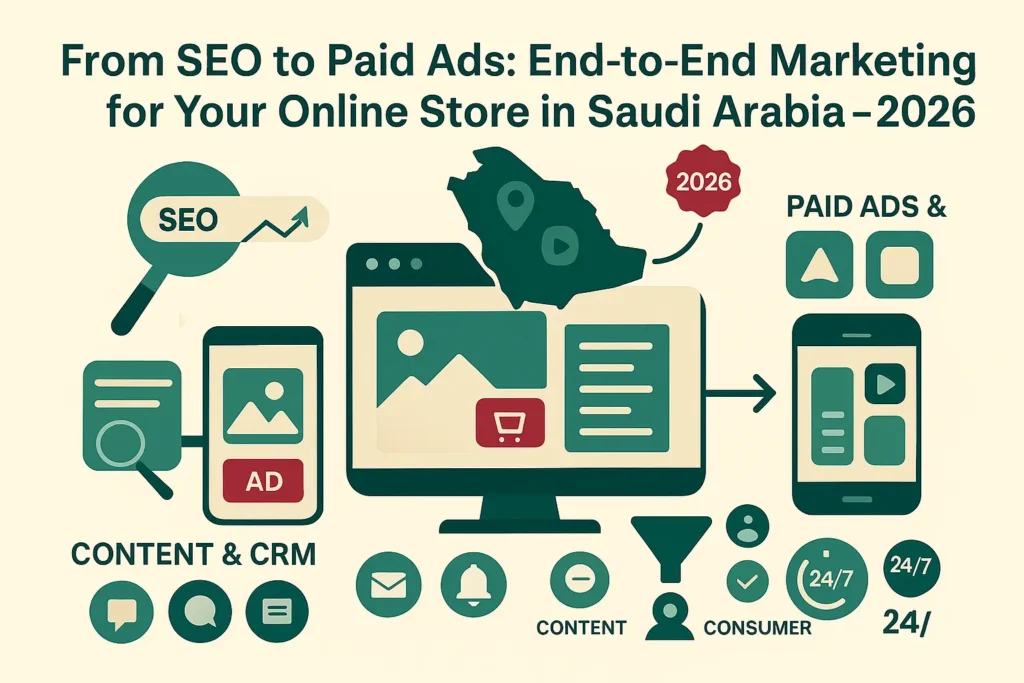
When we say, “From search engine optimization to paid ads: end-to-end marketing for your online store,” we’re not talking about a single tactic or a temporary campaign, but a complete system that owns the customer journey from the first moment of awareness to the moment of purchase and beyond.
The right start in Saudi Arabia begins with prepping the foundation: a trustworthy store, simple and clear design, fast mobile user experience, payment methods suited to the Saudi market, and a transparent shipping policy.
Then you launch the first layer of marketing your online store: SEO, so you appear to those who type in Google the product name, the category, or even problems they’re trying to solve.
A second layer is paid ads on Google, Meta, Snapchat, and TikTok, targeting your audience precisely and bringing qualified traffic to the store.
A third layer is building strong content: articles, landing pages, persuasive Arabic product descriptions, and brand-introducing videos.
Then comes retention: through email marketing, WhatsApp promotional messages, and remarketing to those who visited the store but didn’t complete the purchase.
Finally, monitoring and analytics: tracking conversion rate, average order value, customer acquisition cost, and optimizing campaigns and pages based on real data.
With this integrated vision, marketing your online store shifts from a chaotic set of experiments to a clear, step-by-step plan that truly fits the Saudi market.
Search Engine Optimization… the hidden foundation of your store’s success in Saudi Arabia
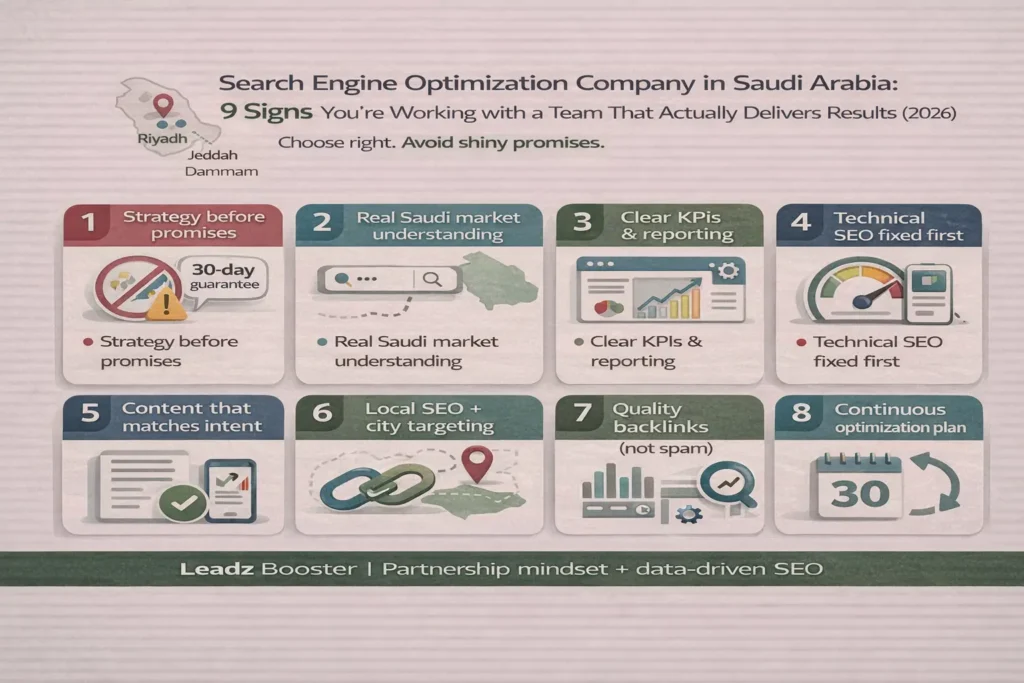
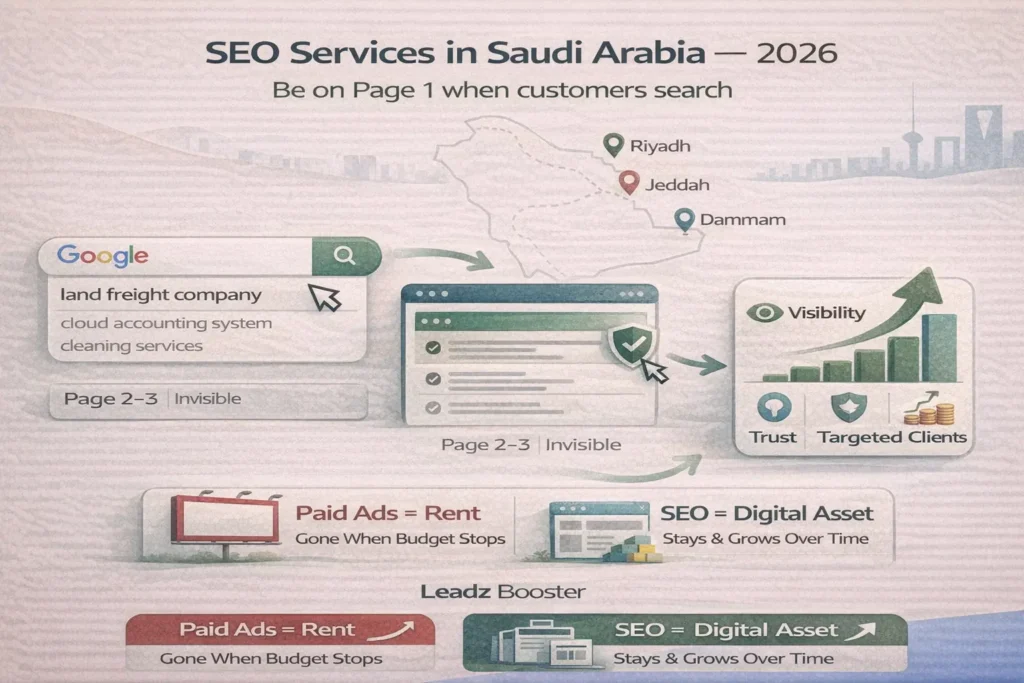
Before you think about paid ads, discounts, and coupons, you need to build a strong foundation for marketing your online store through Search Engine Optimization (SEO). The idea is simple: when a Saudi customer types a product name, a problem, or even a general phrase like “best men’s clothing store in Saudi Arabia” into Google, you have a real chance to appear on the first pages without paying for every click.
Start with keyword research: What phrases does your audience use? Do they search in Saudi colloquial Arabic or Modern Standard Arabic? Do they type “fast shipping inside Saudi Arabia,” “cash on delivery,” or city names like Riyadh, Jeddah, and Dammam with the product name?
Next comes optimizing your store pages: write clear, compelling product titles; provide detailed Arabic descriptions that focus on benefits—not just specs—and naturally include real search phrases without stuffing. Also, improve your store speed, ensure mobile compatibility, and structure categories so visitors can find what they want within seconds.
Creating a specialized blog around product usage, buying tips, and comparisons among options available in the Saudi market increases your chances of appearing in search results and signals to Google that your store is a trustworthy content source. Over time, every SEO-optimized article or page becomes a free channel for bringing in targeted visitors and reducing your total dependence on paid ads—which is the essence of any smart long-term strategy to market your online store.
From Google to Snapchat… how to use paid ads to speed up results
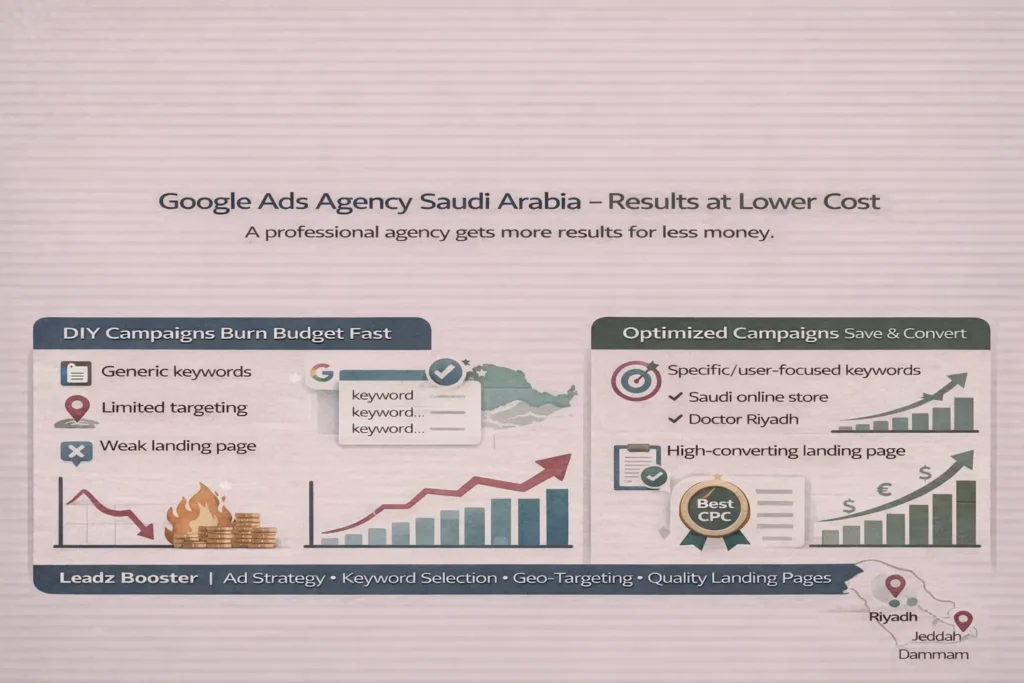
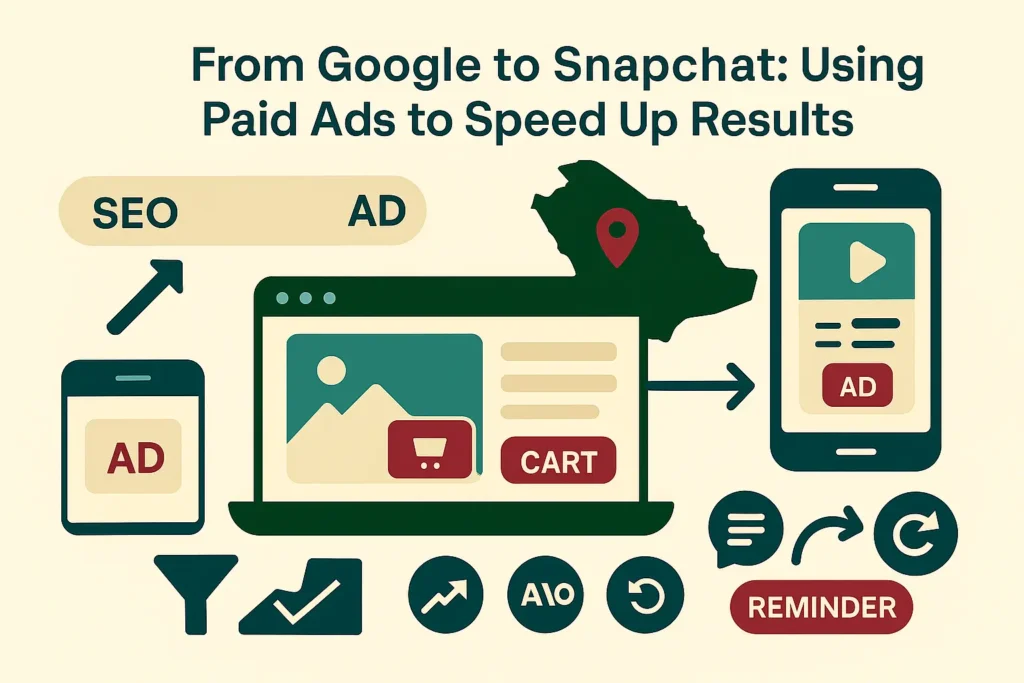
Even if SEO steadily pulls your store forward, a store owner in Saudi Arabia still needs to accelerate results—especially when launching a new store, a seasonal product, or limited-time offers. Here, paid ads become an essential part of marketing your online store, not a substitute for SEO.
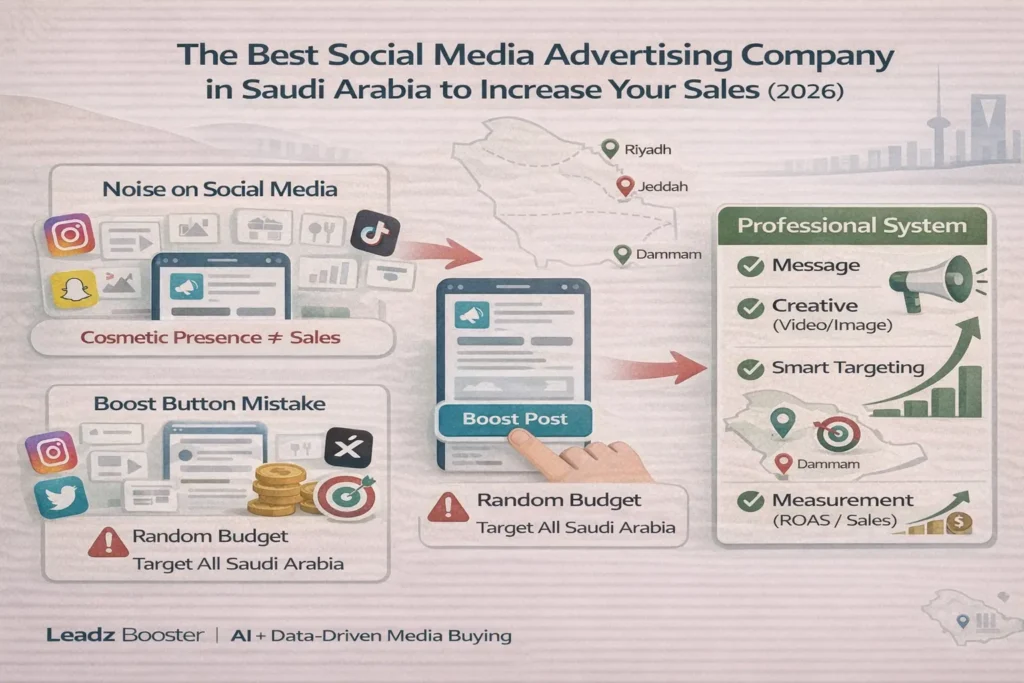
On Google, you can target people already searching for your products, showing up at the top of results with a text ad or Shopping Ads that display the product, price, and image. On platforms like Instagram, Snapchat, and TikTok, you can target your audience by age, interests, city, and even the type of content they engage with—serving them a short video or compelling image that takes them to a landing page or a specific product page.
The success of these ads doesn’t depend only on budget but on the quality of the pages where traffic lands: Is the page fast? Is the message clear? Is the purchase path simple? Are there payment and shipping options suited to the Saudi customer? It’s also crucial to use remarketing for those who entered your store and didn’t complete the purchase—showing them special offers or cart reminders through ads, email, or WhatsApp.
This way, paid advertising shifts from just a “marketing expense” to a measured investment that you manage by the numbers and tie to conversion rate and average order value—becoming a fully integrated part of your online store marketing strategy in the Saudi market.
Accumulated experience in the Saudi market… the difference between a theoretical plan and a plan that drives sales
One of the most important secrets behind successful marketing of your online store in Saudi Arabia is that the person or entity building your plan isn’t still “experimenting” in the market—but has long, real experience inside the Kingdom and the Gulf. Having a team with more than 15 years of work with Saudi brands across different sectors (retail, services, training, specialized stores) means they’ve witnessed the evolution of Saudi customer behavior—from traditional buying to relying on online stores and apps.
This accumulated experience helps avoid costly mistakes, such as targeting the wrong segments, relying on a single marketing channel, or presenting offers that don’t fit price sensitivity in certain regions. An expert team understands that a customer in Riyadh may behave differently from a customer in Jeddah or Dammam, and that some products need to highlight “trust and quality,” while others must emphasize “price and offers.”
Likewise, their understanding of the competitive landscape in Saudi Arabia helps them build your online store marketing strategy based on the market’s reality, not by copying a template from a foreign market that’s entirely different. Here lies the value of a partner who blends deep local insight with global best practices in digital marketing—knowing which products to push in campaigns, how to write Arabic ad messages, and how to build pages that ease the purchase decision for the Saudi customer—turning ad traffic from mere “visits” into real sales and numbers that show up in your store dashboard.
Integrated skills… from strategy and SEO to design, video, and data analysis
The success of marketing your online store doesn’t rely on a single element but on a team with a complete set of skills working together as one system. It starts with a marketing strategist who understands your business goals and the numbers you want to reach within 6–12 months, defining your target audience inside Saudi Arabia and the best channels to reach them.
Alongside is an SEO specialist who knows how to choose suitable keywords for the store and optimize product pages, categories, and the blog to appear on Google gradually and continuously. Then comes a paid-ads specialist who turns this vision into campaigns on platforms like Google, Instagram, Snapchat, and TikTok—with clear audience segmentation and different messages based on the stage the customer is in along the buying journey.
Likewise, having a UX/UI designer and a professional e-commerce developer ensures the landing pages are fast, clear, and easy to use on mobile—and that the purchase experience, from entry to payment completion, is simple and doesn’t lose the shopper. In addition, video production helps showcase products in a way that resonates with the Saudi customer—whether through short social videos or explainer clips on product pages.
Finally comes the skill of data analysis and leveraging AI to understand visitor behavior: Who enters? Who adds to the cart? Who exists before payment—and why? This smart reading of the numbers is what turns your online store marketing plan into a living plan that evolves and improves continuously instead of staying static and losing impact over time.
Real achievements… when the store shifts from passing visits to continuous sales
In the world of marketing your online store, theoretical talk is easy—but what truly matters is results. Here’s where the value appears of a partner who can connect design, marketing, and data analysis to transform the store from a “testing” platform into a real sales machine.
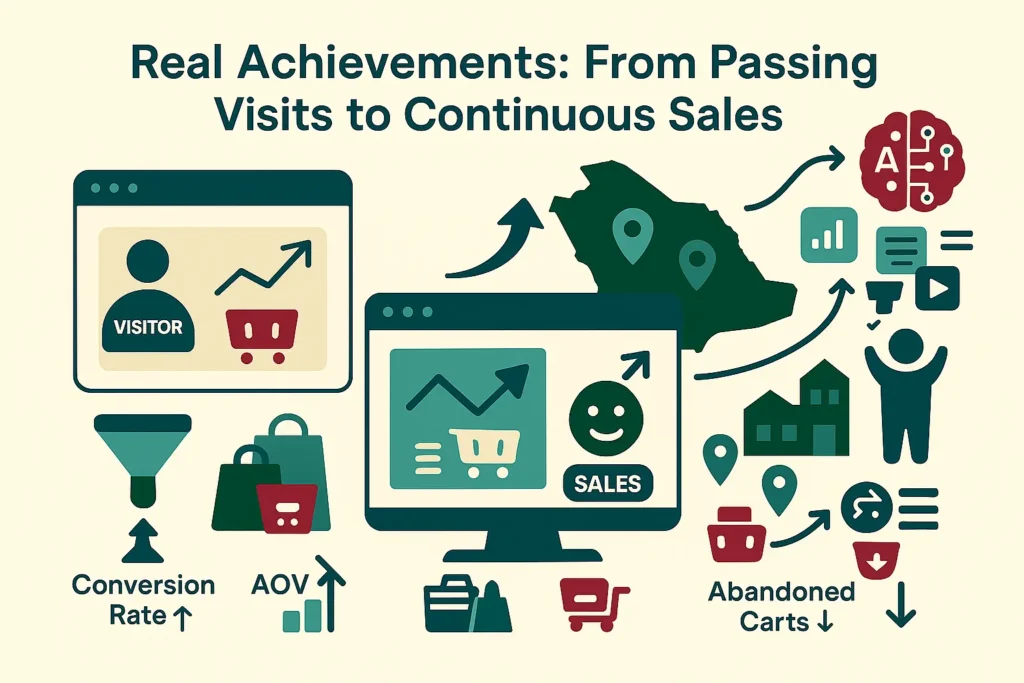
Real achievement isn’t the number of ads published or the volume of traffic alone, but clear metrics: an increase in conversion rate, a rise in average order value, and a drop in abandoned carts before checkout. Serious companies in this field build their reputation through success stories of real clients inside Saudi Arabia and the Gulf—clients they worked with over the medium and long term—successfully moving stores from stagnation to continuous growth.
The beginning is often about reorganizing the fundamentals: improving product pages, writing compelling Arabic descriptions that focus on benefits, designing short purchase journeys, and reducing checkout steps. Then this foundation is tied to smart ad campaigns that target the right audience at the right time—with landing pages tailored to each offer or season.
The achievement multiplies when AI and data analysis enter the picture: discovering best-selling products, the highest-value audiences, and the channels that deliver the best return on ad spend. In this way, marketing your online store shifts from scattered, disconnected attempts into a clear growth path that can be tracked by the numbers and measured month after month—giving the store owner a realistic view of the future in the Saudi market instead of relying on gut feeling alone.
Keep reading and uncover secrets that can change the way you work. How to Benefit from Digital Marketing and SEO
Passion for continuous improvement… the secret to sustaining your store’s growth in a fast-moving market
Even if you’ve built a strong foundation for marketing your online store, the bigger challenge is maintaining that success in a market that moves as quickly as Saudi Arabia’s. This is where a passion for continuous improvement becomes a core value in the partner you choose. A passionate team doesn’t treat launching the store or the first ad campaign as the finish line—it considers them the starting point.
They start asking ongoing questions: Can the site’s speed be improved further? Can the checkout form be simplified? Are the current ad messages still compelling after three months? Have customers shifted toward a different content format (e.g., short videos instead of static images)? This mindset doesn’t rely on guesswork, but on real data gathered from ad platforms, store analytics, and visitor behavior inside your pages.
True passion appears when the team tests multiple versions of a product page, more than one ad message, and more than one promotional offer—then chooses what’s proven by the numbers. Likewise, leveraging AI tools helps uncover patterns that aren’t easily noticed by humans, such as time windows when orders spike, cities or regions that respond to particular offers, or products that perform best when bundled with other items in “Buy 1, Get 2”-style promotions.
In a competitive environment like Saudi Arabia, this passion for continuous improvement is both the shield and the sword—it protects you from slipping behind new competitors while opening new growth opportunities, turning marketing your online store into a renewable, evolving program rather than a campaign that ends once the budget runs out.
Keep reading and uncover secrets that can change the way you work. Fundamentals of Digital Marketing for Small and Medium Enterprises: The Start Towards Growth
An integrated marketing system… from attracting the visitor to building customer loyalty
In 2026, viewing marketing your online store as “just ads” is a severely incomplete approach. A successful store in Saudi Arabia relies on an integrated system that begins the moment a customer discovers the brand and doesn’t end after the first purchase.
At the top of the funnel (TOFU), search engines and social platforms play a fundamental role in building awareness: SEO-optimized articles to appear on Google, educational content on Instagram and TikTok, and short Snapchat ads that introduce followers to the store and its value.
In the middle of the funnel (MOFU), the focus shifts to convincing the customer and comparing alternatives: detailed product pages, reviews from Saudi customers, video content demonstrating product quality, and landing pages tailored to specific offers.
At the bottom of the funnel (BOFU), it’s time for retargeting with special offers, incentive coupons, and abandoned-cart reminders. But the journey doesn’t end there; after the purchase begins the loyalty-building phase: personalized thank-you messages, content offering tips on product usage, points and rewards programs for repeat purchases, and special campaigns exclusively for existing customers.
Linking all these stages into a single, data-driven system enables you to understand customer lifetime value (LTV) and calibrate your ad budget accordingly. With this vision, marketing your online store shifts from a set of disconnected steps to a cohesive system that works together to raise your profits, shorten Saudi customers’ decision time, and turn a passerby into a loyal buyer who returns and purchases more than once.
Keep reading and uncover secrets that can change the way you work. A Smart, Practical Marketing Product Plan in Riyadh — Start Now with AI Experts
Where to start, practically? A roadmap to marketing your online store through 2026
Now that the picture is clear, the most important question remains: how do you practically begin marketing your online store in Saudi Arabia in an organized way? The first step is to honestly assess your current state: Is your store ready from a technical-experience standpoint (speed, mobile responsiveness, easy payment and shipping)? Are your product pages written in a way that convinces Saudi customers and answers their questions?
Next, set clear numeric goals for a 3–6 month period, such as increasing conversion rate by a specific percentage, doubling monthly orders, or reducing the cost of acquiring a new customer. The third step is to set priorities: start by improving store fundamentals (technical SEO, product copy, page architecture), then launch small, segmented ad campaigns across more than one platform to test which channel yields the best return.
At the same time, start building long-term content through the blog and landing pages, while setting up a simple system to collect customer data (email, phone number, consent to receive offers), so you can run effective retargeting campaigns later. Choosing a digital-marketing partner who understands the Saudi market and uses AI and data analysis will save you years of trial and error—because they have the experience to design a comprehensive strategy, execute it, and continuously review results with you.
Most importantly, don’t view marketing your online store as a temporary project, but as a long-term investment in a digital asset capable of growing as your business expands, as you enter new cities within the Kingdom, and as you later expand into other Gulf markets. With this mindset, 2026 becomes a true launch point for your store—not just another passing year in your business journey.
Turn your goals into real achievements with our tailored services – request the service now.
Marketing for Saudi Online Stores: FAQs
What does “end-to-end marketing” mean for a Saudi online store?
It’s a full system that owns the customer journey—from awareness to purchase and retention:
Foundation (fast, mobile-first UX, KSA-friendly payments/shipping) →
SEO (free demand capture) →
Paid ads (Google/Meta/Snap/TikTok) →
Content (Arabic product copy, blogs, videos) →
Retention (email/WhatsApp, remarketing) →
Analytics (CRO, AOV, CAC, ROAS).
How should I approach SEO for my Saudi e-commerce site?
- Keyword research: Arabic (MSA + colloquial) with KSA intents (e.g., “شحن سريع داخل السعودية”, “الدفع عند الاستلام”, city + product).
- On-page: clear product titles, benefit-led Arabic descriptions, logical categories, internal links.
- Tech/UX: speed, mobile responsiveness, clean architecture.
- Content hub: comparison guides, usage tips, KSA-specific FAQs to earn organic traffic and reduce paid dependency.
How do paid ads (Google → Snapchat/TikTok) accelerate results?
- Google: capture in-market demand via Search/Shopping (image, price, availability).
- Social (IG/Snap/TikTok): target by age, city, interests; use short videos/images to focused product/landing pages.
- Quality matters: fast pages, clear offer/price, KSA-fit payments/shipping.
- Remarketing: recover browsers and cart abandoners via ads, email, and WhatsApp.
Why do local experience and integrated skills matter?
KSA behavior varies by city and category. A partner with 15+ years GCC experience and a cross-functional team (strategy, SEO, paid media,
UX/UI, dev, video, data/AI) avoids costly mistakes, writes persuasive Arabic, builds fast mobile journeys, and uses analytics/AI to
prioritize products, audiences, and channels that maximize ROAS.
What’s a practical 90-day roadmap for 2026?
- Days 1–30: audit speed/UX/payments, fix category & product pages, set up GA4 + pixels, define conversions; publish 3–5 SEO articles.
- Days 31–60: launch small segmented campaigns on 2–3 platforms; test creatives/offers; implement cart/visit remarketing; optimize checkout.
- Days 61–90: scale winners, expand keywords/audiences, add TOFU/MOFU content, start email/WhatsApp flows; review CRO, AOV, CAC, ROAS monthly and iterate.