Target Audience: What is it, and how to define it?
Target Audience Definition: Types, Steps & Examples
In today’s competitive digital marketing world, you can’t afford to market your products to everyone and still expect tangible results. Understanding your ideal customer has become the cornerstone of modern marketing success. When you fail to define your target audience precisely, you’re essentially throwing your marketing budget into the void, hoping something will work.
The cost of untargeted marketing is staggering. Companies that employ random, scattershot marketing methods typically see conversion rates below 2%, whereas companies with a well-defined target audience achieve conversion rates of 15% or higher. This large gap illustrates the power of targeted marketing compared to haphazard approaches.
Spray-and-pray marketing treats all prospects as identical, resulting in generic messages that resonate with no one. Targeted marketing, however, speaks directly to specific groups of people who are most likely to engage with your brand, buy your products, and become loyal advocates.
“Companies that use targeted-marketing strategies are 67% more likely to see higher conversion rates and 58% more likely to generate revenue from their marketing efforts.”
Research consistently shows that companies investing in identifying and analyzing their target audience see far better returns on their marketing spend. Your marketing budget works much harder when every dollar is spent reaching people who actually want what you offer.
What Is a Target Audience: A Comprehensive Definition and Core Concepts
Your target audience is a specific group of people who share common characteristics, interests, and behaviors that make them more likely to engage with your brand. These individuals represent the sweet spot where your product or service meets real consumer needs and desires.
Understanding the difference between a target audience and a target market is critical to your marketing success. The target market encompasses the broader commercial environment and all potential customers who might purchase what you offer. Your target audience, however, is a more precisely defined subset within that market—the specific people you actively aim to reach with your marketing messages.
The relationship between your target audience and buyer personas adds another layer of precision. While your target audience defines the broader group, buyer personas are detailed, semi-fictional profiles that embody the key attributes of your ideal customers. Think of your target audience as the forest and your buyer personas as the individual trees.
Effective target audiences share several key attributes. They must be clearly identifiable through specific demographic, psychographic, or behavioral data. They should be reachable via identifiable marketing channels. Most importantly, they must be large enough to justify your marketing investment while still focused enough to allow effective personalization.
Your target audience should also demonstrate a clear propensity to engage and convert. There’s little value in directing your efforts toward people who fit your demographic profile but have no interest in your product category or lack the means to buy.
Types and Classifications of Target Audiences
Demographic classifications form the foundation of most audience-targeting strategies. You can segment your audience by age ranges, gender identities, education levels, income brackets, and family status. For example, a luxury automaker might target professionals aged 35–55 with annual incomes above $100,000.
Geographic segmentations—where your potential customers live and work—are equally important. These segmentations account for differences in climate, population density, regional preferences, and cultural variations. A winter-apparel brand will naturally focus on regions with cold seasons, while a surfboard manufacturer targets coastal areas.
Behavioral segmentations examine how people interact with products and brands. This method looks at purchasing patterns, brand loyalty levels, usage frequency, and decision-making processes. Some customers are early adopters who embrace new products immediately, while others prefer to wait for social proof before buying.
Psychographic segmentations explore personality traits, values, interests, and lifestyle choices. This approach reveals why people make certain decisions and what motivates their behavior. Understanding whether your audience values sustainability, luxury, convenience, or innovation helps shape your messaging strategies.
Your primary audience represents the most valuable customer group—the segment most likely to purchase your product and generate the highest lifetime value. Your secondary audience includes people who may influence purchase decisions or represent opportunities for future growth.
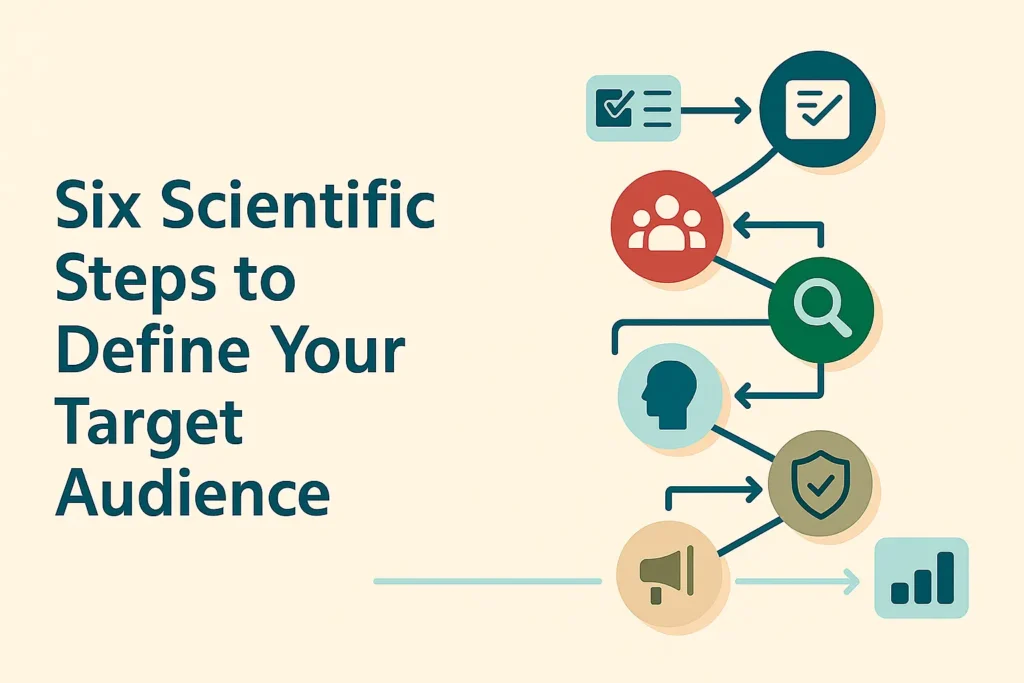
Scientific Steps to Define Your Target Audience
Start your audience-definition process by conducting a comprehensive analysis of your product or service. Examine the problems it solves, the benefits it delivers, and what makes it unique. This analysis reveals clues about who will value what you sell the most.
Study your current customers to identify common patterns and characteristics. Analyze their demographics, purchasing behaviors, and engagement patterns. Look for trends related to when they buy, how much they spend, and which channels they prefer for communication.
Market and competitor research provide valuable insights into audience preferences and behaviors. Review who your competitors target and identify potential gaps or underserved segments. This research can uncover opportunities to differentiate your approach or discover new audience segments.
Create detailed buyer personas based on your research findings. Develop multiple personas representing distinct segments within your broader target audience. Each persona should include demographic details, pain points, motivations, preferred communication channels, and decision-making criteria.
Test and validate your audience definition through small-scale marketing campaigns or surveys. Monitor engagement rates, conversion metrics, and feedback to confirm targeting accuracy. Be prepared to refine your definition based on real-world performance data.
Advanced Tools and Techniques for Audience Identification
Google Analytics tools provide powerful insights into your audience’s composition and behavior. Google Analytics reveals detailed demographic and psychographic information about your site visitors, while Google Trends helps identify popular search terms and seasonal patterns within your target market.
Social media platforms offer sophisticated audience insights through their built-in analytics. Facebook Insights, Instagram Analytics, and LinkedIn Analytics provide detailed information about your followers’ demographics, interests, and engagement patterns. These platforms also provide audience research tools that help you understand broader market segments.
Digital survey platforms such as SurveyMonkey and Google Forms enable direct audience research via surveys and interviews. These tools help you collect qualitative insights about customer preferences, pain points, and decision-making processes that quantitative data might miss.
Big-data analytics tools can process massive volumes of information to identify audience patterns and predict behaviors. These technologies use machine-learning algorithms to segment audiences and forecast which individuals are most likely to convert.
Competitor-analysis tools help you understand which audiences your competitors are targeting and how they craft their messaging. This information can reveal market gaps or validate your own targeting strategies.
Common Mistakes in Defining the Target Audience—and How to Avoid Them
Targeting an audience that’s too broad dilutes your messaging and wastes resources on people unlikely to convert. Conversely, defining your audience too narrowly limits reach and may not provide sufficient market size for sustainable growth.
Relying on assumptions instead of data leads to targeting the wrong people or using misaligned messaging. Your audience definition should always be grounded in solid research, customer feedback, and performance data, not hunches or stereotypes.
Failing to update your audience data regularly means you’ll miss important shifts in consumer behavior, preferences, or demographics. Markets evolve continuously, and your target audience definition must evolve with them.
Ignoring changes in consumer behavior, especially those driven by technology or cultural shifts, can render your targeting strategies ineffective. Stay aware of broader trends affecting your industry and customer base.
Overlooking your audience’s preferred communication channels wastes marketing efforts and reduces engagement. Different audience segments favor different platforms and communication styles, so your strategy must account for these preferences.
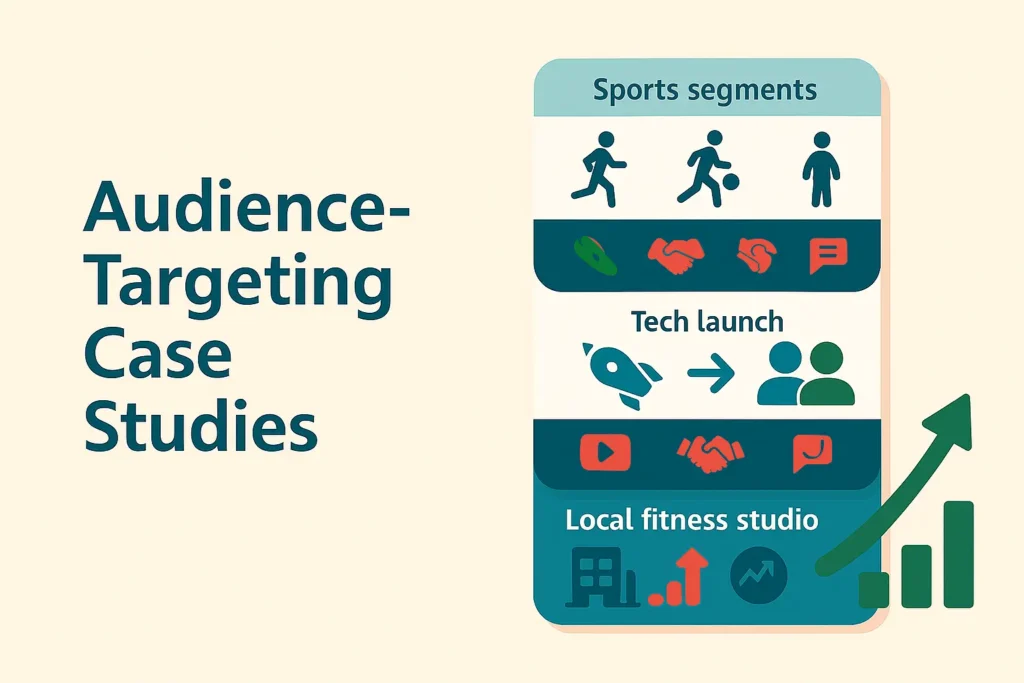
Practical Examples and Successful Case Studies
Nike’s success in audience targeting demonstrates the power of focusing on specific customer segments. Instead of marketing to all athletes, Nike creates distinct campaigns for runners, basketball players, and casual sports enthusiasts. Each campaign uses different messaging, visuals, and channels tailored to the defined audience.
Consider how a new tech product launch approaches audience targeting. The company will first identify early adopters who embrace new technology quickly, followed by pragmatic users who wait for proven solutions. Each group requires different messaging—early adopters respond to innovation and cutting-edge features, while pragmatic users prefer reliability and user testimonials.
A local business success story illustrates effective targeting on a smaller scale. A boutique fitness studio identified busy professionals aged 25–40 who value high-quality, efficient workouts. By targeting this specific segment via LinkedIn ads and partnerships with nearby office buildings, they reached 80% capacity within six months.
Analysis of successful marketing campaigns reveals common elements of effective audience targeting. Winning campaigns typically focus on specific pain points, use language and imagery that resonate with their target audience, and deliver messages through the channels where that audience is most active.
Strategic Benefits of Accurately Defining the Target Audience
Improved marketing ROI is the most direct benefit of precise audience targeting. When you reach the right people with messages that elicit responses, you achieve higher engagement and greater conversion rates while reducing wasted ad spend.
Higher engagement and conversion rates result from delivering relevant content to interested audiences. People respond more positively to marketing messages that address their specific needs and interests, leading to higher click-through rates, longer interaction times, and more conversions.
Product development benefits greatly from a clear understanding of your audience. When you know exactly whom you serve, you can design products and services that better meet their needs, resulting in higher satisfaction and loyalty.
Building stronger customer relationships becomes easier when you deeply understand your audience. You can create more personalized experiences, anticipate customer needs, and communicate in ways that truly resonate with your defined audience.
Differentiation from competitors is more attainable when you target specific audience segments that others may overlook or underserve. Focused targeting allows you to become the preferred choice for particular customer groups.
Strategies to Reach and Engage Your Target Audience
Choosing the right marketing channels requires understanding where your audience spends time and how they prefer to consume information. Younger audiences may prefer social platforms, while professional audiences may respond better to email newsletters or LinkedIn content.
Content development must closely align with your audience’s interests, challenges, and preferred formats. Some audiences prefer in-depth written content, while others respond better to visuals, videos, or interactive experiences.
You maximize impact in messaging when you time your communications effectively. Knowing when your audience is most likely to engage—early morning, during lunch breaks, or evening hours—helps optimize campaign performance.
Using appropriate language and tone ensures your messages resonate with your target audience. Professional audiences expect formal communications, while younger and lifestyle-oriented audiences may prefer informal styles.
Providing measurement and audience response yields insights for continuous improvement. Track engagement metrics, conversion rates, and feedback to understand what resonates with your audience—and what doesn’t.
Measuring Target-Audience Effectiveness and Optimization
Key performance indicators (KPIs) for evaluating targeting success include engagement rates, conversion rates, acquisition cost, and customer lifetime value (CLV). These metrics reveal whether you’re reaching the right people and whether they’re responding positively to your messages.
Analyzing engagement and conversion rates helps identify which audience segments deliver the best ROI. Compare performance across demographic groups, geographies, or behavioral segments to refine your targeting strategy.
A/B testing different audience segments or messaging approaches provides valuable insights for optimization. Test demographics, interests, or communication styles to determine the most effective combinations.
Monitoring customer feedback via surveys, reviews, and social comments provides qualitative insights that complement your quantitative data. This feedback helps you understand not just what works, but why it works.
Adjusting your targeting strategy based on performance data ensures continuous improvement. Be ready to refine your defined audience, adjust messaging, or explore new channels based on what you learn from your campaigns.
Keep reading and uncover secrets that can change the way you work. The best strategies to increase sales and how to apply them?
The Future of Defining Target Audiences: Trends and Modern Technology
Artificial intelligence is revolutionizing audience definition by processing massive data sets to identify patterns and predict behaviors. AI tools can analyze customer interactions, purchase history, and online behavior to create precise audience profiles automatically.
Privacy and data-security concerns are reshaping how companies collect and use customer data. New regulations and rising consumer awareness mean you must be more transparent about data collection while finding ways to understand your audience within these constraints.
Hyper-personalization represents the evolution of targeted marketing, where each individual receives uniquely tailored experiences based on specific preferences and behaviors. This approach requires deep data analytics and advanced automation tools.
Predictive marketing leverages big data and machine learning to anticipate customer needs and behaviors. These techniques help identify potential customers before they even realize they need your product or service.
Adapting to technological and societal changes keeps your targeting strategies effective as consumer behaviors evolve. Stay aware of emerging platforms, shifting communication preferences, and how different generations interact with brands.
Keep reading and uncover secrets that can change the way you work. What is Ads Manager and how to use it?
Roadmap to Success: From Definition to Execution
Building a comprehensive action plan for defining and implementing your target audience requires a coordinated methodology. Start with research and data collection, move to analysis and persona development, and finish with testing and optimization.
Beginners should start with basic demographic and geographic segmentation before moving into more complex behavioral and psychographic targeting. Build your skills gradually instead of attempting complex segmentation immediately.
Free resources and tools can jumpstart audience analysis without major investment. Google Analytics, social media insights, and simple customer surveys provide valuable data at no cost.
As your business grows, building a specialized audience-analysis team becomes important. Team members should have skills in data analysis, market research, customer service, and digital marketing to ensure a holistic audience understanding.
Developing a long-term vision for sustainable audience relationships focuses on building lasting connections rather than short-term conversions. Consider how your target audience may evolve—and how you can grow with them.
Keep reading and uncover secrets that can change the way you work. Best Ways to Sales Promotion: Pros and Cons
Your Path Forward: Turning Insights into Success
Transforming your understanding of your target audience changes marketing from guesswork to strategic precision. The investment you make in defining and understanding your target audience pays off through improved marketing efficiency, higher conversion rates, and stronger customer relationships.
The journey from audience definition to marketing success requires patience, testing, and continuous optimization. Your understanding deepens over time as you collect more data and gain more experience engaging with customers.
Remember: your target audience is not static. As markets evolve, technology advances, and consumer preferences change, you must be prepared to evolve your understanding and approach accordingly.
Businesses that thrive in competitive markets are those that understand their customers deeply. By investing time and resources into defining and understanding your target audience, you lay the foundation for sustained marketing success and business growth.
Turn your goals into real achievements with our tailored services – request the service now.
Frequently Asked Questions
What’s the difference between a target audience and a target market?
Your target audience is more specific and focuses on consumer characteristics and behaviors, while the target market includes the broader commercial environment and the entire base of potential customers. Think of the target market as the ocean, and the target audience as the specific fish you’re trying to catch.
How often should I reassess my target audience?
Review your target audience every 6–12 months, or when launching new products or entering new markets. Major changes in your industry, customer behavior, or business model also warrant a reassessment.
Can small businesses define their audience without big budgets?
Absolutely. Small businesses can use free tools like Google Analytics, interview current customers, create simple surveys, and analyze social-media data to understand their audience without significant investment.
What if I have multiple target audiences?
You can segment different audiences and create separate strategies for each segment. Many successful businesses target multiple groups with tailored messaging and campaigns, while maintaining overall brand consistency.
How do I know if my target audience definition is accurate?
Monitor engagement rates, conversion rates, and the positive response to your campaigns. High engagement and conversions usually indicate accurate targeting, while weak performance signals a need to refine your audience definition.